




Modern blogging is no longer just about writing. It is about processing massive amounts of information quickly.
A single article may require reviewing dozens of sources including research papers, competitor blogs, statistics pages, and industry reports. Managing this information manually can become overwhelming.
This is where AI knowledge graph tools become extremely powerful. These tools organize information visually and reveal relationships between ideas, helping bloggers transform scattered research into structured insights.
If you are building an authority blog like AI Tools Era, knowledge graphs can help you create better topic clusters, stronger internal linking structures, and more comprehensive content strategies.
What Is an AI Knowledge Graph?
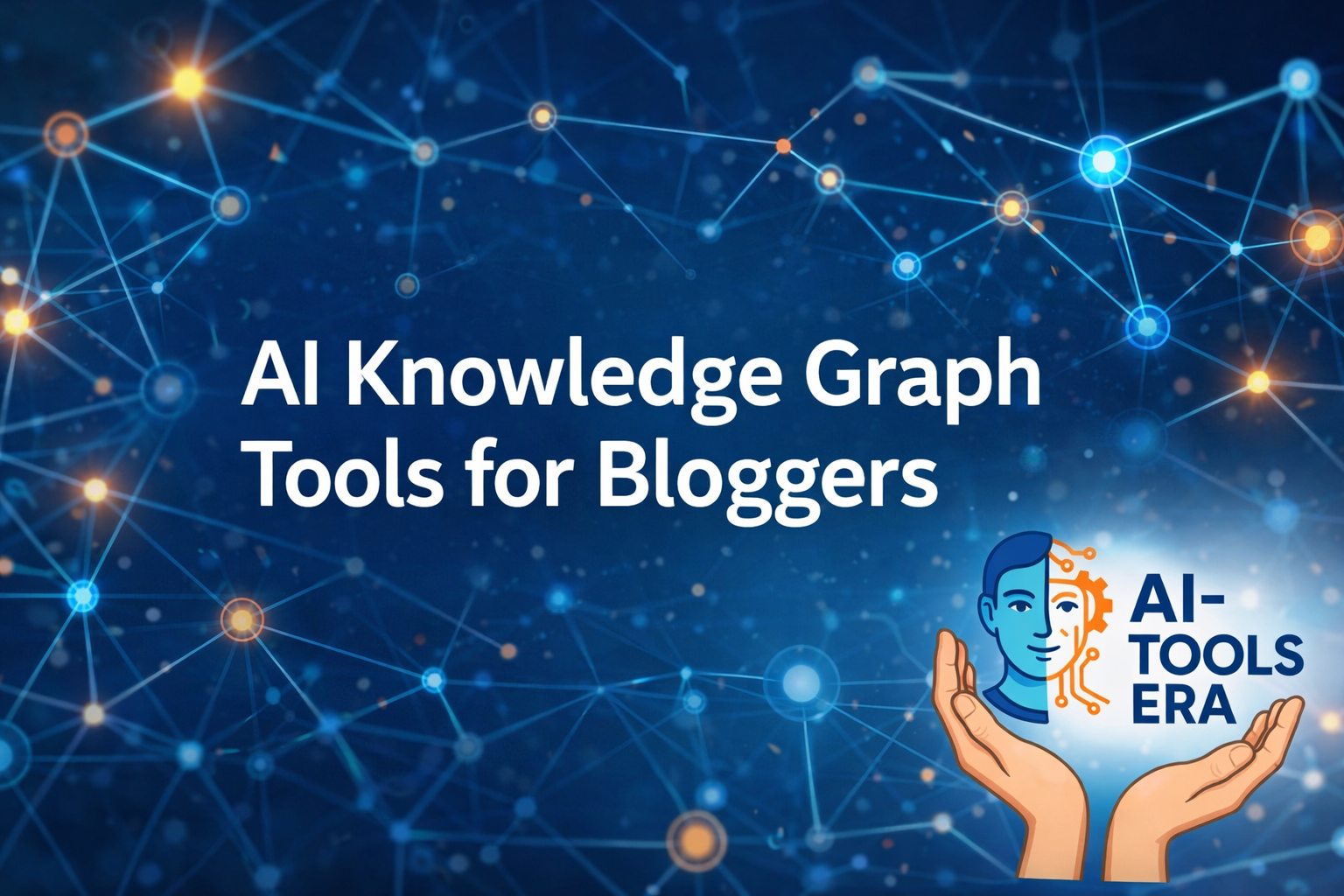
A knowledge graph is a visual representation of how pieces of information relate to each other.
Instead of storing notes as isolated documents, knowledge graphs connect ideas together. These connections form a network that reveals deeper relationships between topics.
Large technology companies like Google use knowledge graphs to understand how information across the web is connected.
For bloggers, this concept helps organize research topics such as:
- AI blogging tools
- SEO automation
- content research
- topic clusters
- internal linking strategies
Instead of scattered research notes, bloggers get a visual map of knowledge.
Knowledge graphs help bloggers build topical authority by clearly showing how related articles should connect.
Why Knowledge Graph Tools Are Important for Bloggers
Bloggers who rely only on traditional research methods often miss important connections between topics.
AI knowledge graph tools solve this problem by revealing relationships that would otherwise remain hidden.
1. Faster Research
Instead of manually organizing notes, AI automatically identifies key ideas and connections.
2. Discover Hidden Content Opportunities
Knowledge graphs reveal related topics you may not have considered while planning your content.
3. Build Topical Authority
Search engines reward websites that cover topics comprehensively. Knowledge graphs help bloggers build structured topic clusters.
You can read our guide on How AI Can Analyze Thousands of Articles in Minutes to see how AI speeds up the research process before organizing the insights into knowledge graphs.
4. Improve Internal Linking
When topic relationships are visible, internal linking becomes easier and more strategic.
How AI Knowledge Graph Tools Work
Step 1 — Import Research Sources
Most tools allow importing information from:
- Blog articles
- research papers
- PDF documents
- URLs
- notes
Step 2 — AI Extracts Concepts
The AI system identifies:
- keywords
- entities
- topics
- relationships between ideas
Step 3 — Topic Connections Are Created
The system connects related ideas automatically.
Step 4 — Visual Knowledge Map Appears
The final result is a visual graph showing clusters of information.
Bloggers can immediately identify content gaps and future article ideas.
Best AI Knowledge Graph Tools for Bloggers
1. Obsidian
Obsidian is one of the most popular knowledge graph tools used by writers and researchers.
It allows users to connect notes using backlinks and automatically generates a visual knowledge graph.
Key Features:- visual graph of connected notes
- powerful markdown writing environment
- plugin ecosystem
- local data storage
2. Logseq
Logseq is an open-source knowledge management platform designed for structured thinking.
Key Features:- graph-based note connections
- outline-based workflow
- knowledge visualization
- AI plugin integrations
3. Mem AI
Mem AI automatically organizes notes and suggests relationships between ideas using artificial intelligence.
Key Features:- AI-powered organization
- automatic topic grouping
- semantic search
- smart knowledge discovery
4. Heptabase
Heptabase is designed for deep research and visual knowledge management.
Key Features:- visual research whiteboards
- knowledge card system
- topic clustering
- deep research organization
5. Connected Papers
Connected Papers helps researchers discover relationships between academic papers.
Key Features:- visual research graphs
- citation relationship mapping
- research discovery
- trend analysis
How Knowledge Graphs Help SEO
Search engines analyze relationships between topics to determine authority.
When your website covers interconnected topics, it signals strong topical relevance.
Knowledge graphs help bloggers build content ecosystems instead of isolated posts.
If you are building an AI-focused blog, you should also read:
Example Workflow for Bloggers
- Collect 20–50 articles about a topic.
- Import notes into a tool like Obsidian.
- Link related ideas together.
- View the knowledge graph visualization.
- Identify missing topics.
- Create new blog posts based on those gaps.
This workflow helps bloggers build stronger topical authority and plan content more strategically.
The Future of Knowledge Graph Research
Artificial intelligence is rapidly transforming research workflows.
Modern tools combine knowledge graphs with:
- large language models
- semantic search
- automated summarization
- content generation
For bloggers and affiliate marketers, these tools can significantly reduce research time while improving content depth.
Instead of writing random blog posts, use knowledge graphs to build interconnected topic clusters that search engines recognize as authority hubs.
Frequently Asked Questions
What is a knowledge graph?
A knowledge graph is a visual representation of how ideas, topics, or pieces of information are connected.
Do knowledge graphs help with SEO?
Yes. They help bloggers organize content into logical topic clusters, which improves internal linking and topical authority.
Which knowledge graph tool is best for beginners?
Obsidian is one of the best tools for beginners because it is flexible, powerful, and widely used by researchers and writers.
Can knowledge graphs improve blog research?
Yes. They help bloggers discover hidden relationships between topics, identify content gaps, and plan future articles more strategically.
If you want to continue learning about AI-powered blogging workflows, read our next guide:
👉 AI Tools That Turn Research Into Blog Outlines Automatically