




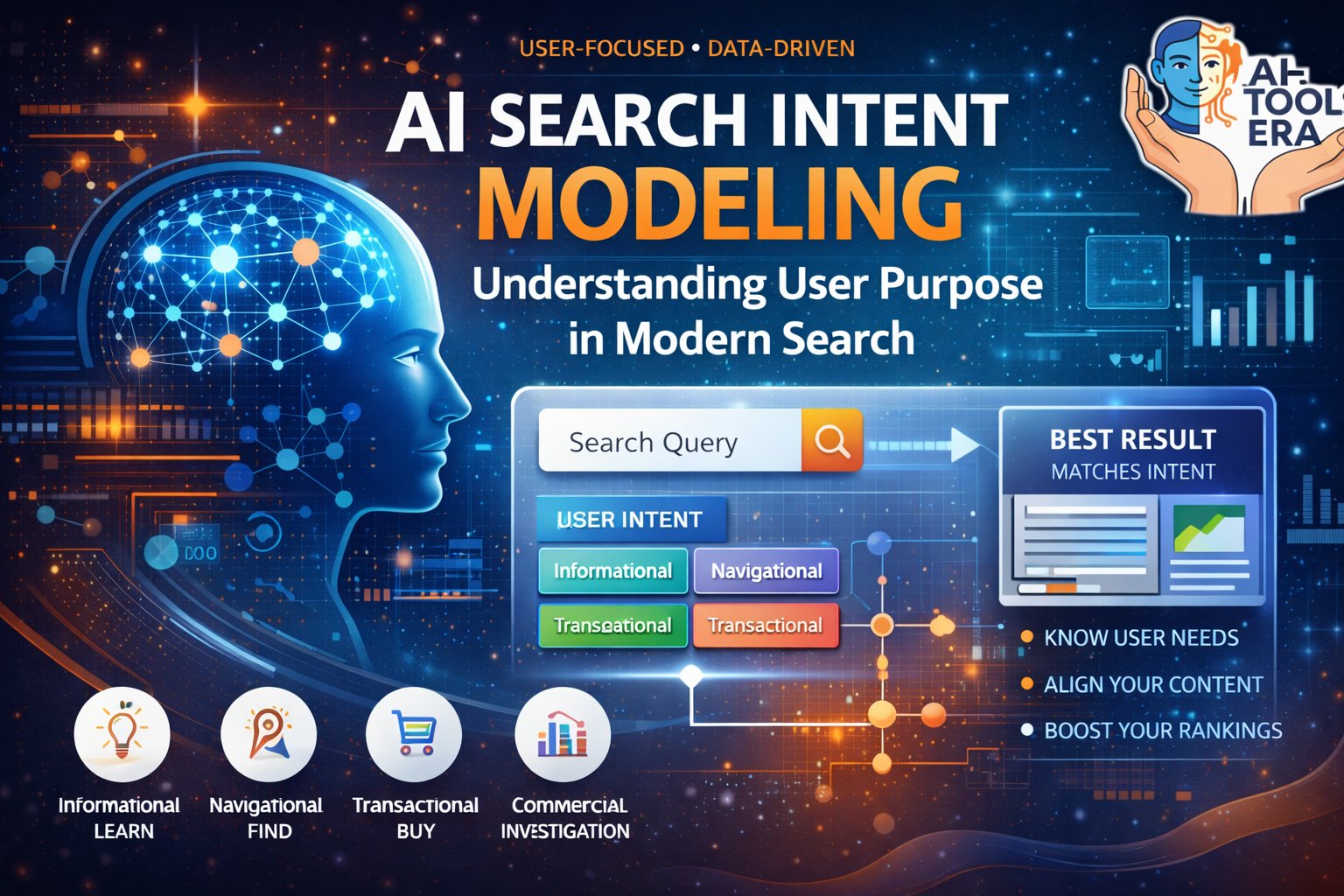
Modern search engines are no longer focused solely on matching keywords. Instead, they aim to understand why a user is searching. This shift has led to the rise of AI Search Intent Modeling, a system that analyzes and predicts user intent to deliver more relevant results.
Rather than optimizing content around keywords alone, effective strategies now align content with user goals, expectations, and behaviors. This approach significantly improves both search visibility and user satisfaction.
In this guide, you will learn what AI Search Intent Modeling is, how it works, and how to apply it using a structured, evergreen framework.
What is AI Search Intent Modeling?
AI Search Intent Modeling is the process of identifying and categorizing the purpose behind a user’s search query using artificial intelligence. It focuses on understanding the underlying goal rather than the exact words used.
This concept is closely connected with AI Semantic SEO, where meaning and context are prioritized, and AI Topic Clustering, where content is structured around related topics.
Search intent generally falls into four primary categories:
- Informational: The user wants to learn something
- Navigational: The user is looking for a specific website or page
- Transactional: The user intends to take an action or make a purchase
- Commercial Investigation: The user is comparing options before making a decision
AI systems analyze patterns across millions of queries to accurately determine which intent category a search belongs to.
How AI Search Intent Modeling Works
AI-driven search systems use multiple layers of analysis to understand intent.
1. Query Analysis
The system examines the structure, language, and phrasing of a search query to identify signals of intent.
2. Behavioral Data Processing
User behavior, such as click patterns and time spent on pages, helps refine intent classification.
3. Contextual Understanding
AI considers context, including location, device, and search history, to improve accuracy.
4. Content Matching
The system evaluates which content best satisfies the identified intent.
5. Continuous Learning
Intent models evolve based on ongoing user interactions and feedback.
Further Reading and References
Why Search Intent Matters
Understanding intent is critical because search engines prioritize content that best satisfies user needs.
- Improved relevance: Content matches user expectations
- Higher engagement: Users stay longer and interact more
- Better rankings: Search engines reward intent alignment
- Reduced bounce rates: Users find what they need quickly
Ignoring intent leads to mismatched content, even if keywords are optimized correctly.
Core Components of Search Intent Modeling
1. Intent Classification
Categorizing queries into clear intent types.
2. Context Awareness
Understanding the situation in which the query is made.
3. Content Alignment
Matching content structure and depth with user expectations.
4. Behavioral Feedback
Using user interaction data to refine intent accuracy.
5. Continuous Optimization
Updating content as intent patterns evolve.
Relationship with Other AI Content Systems
Search Intent Modeling is part of a broader ecosystem of AI-driven content systems:
- AI Semantic SEO – Focuses on meaning and context
- AI Topic Clustering – Structures content into clusters
- AI Knowledge Graphs – Connects entities across topics
- AI Content Pipelines – Organizes content workflows
Real-World Applications
Search Intent Modeling is widely used across different domains:
- Content Platforms: Delivering relevant educational content
- E-commerce: Matching products to user needs
- Search Engines: Improving result accuracy
- Business Websites: Aligning services with user expectations
In each case, intent alignment is key to effectiveness.
Practical Framework for AI Search Intent Modeling
Step 1: Identify Target Queries
Understand what users are searching for in relation to your topic.
Step 2: Classify Intent
Determine whether the query is informational, navigational, transactional, or commercial.
Step 3: Analyze Existing Content
Review current search results to understand what type of content ranks.
Step 4: Align Content Structure
Match your content format with user expectations.
Step 5: Optimize for Clarity
Ensure your content clearly answers the user’s need.
Step 6: Monitor Behavior
Track engagement metrics to refine your approach.
Step 7: Continuously Improve
Update content based on changing intent patterns.
Tools That Support Search Intent Modeling
While intent modeling is concept-driven, certain tools can assist in analyzing and understanding user behavior.
These tools enhance insights but should support a well-structured strategy.
Key Insights
- Search intent focuses on user purpose, not just keywords
- Content must align with what users want to achieve
- AI systems continuously refine intent understanding
- Intent alignment improves rankings and engagement
- This approach is essential for modern SEO
FAQ
What is search intent?
Search intent refers to the purpose behind a user’s query.
Why is intent important?
It ensures content matches user expectations, improving relevance and rankings.
Can intent change over time?
Yes, intent evolves based on user behavior and trends.
How do I identify intent?
By analyzing queries, search results, and user behavior.
Does intent modeling improve SEO?
Yes, it aligns content with how search engines evaluate relevance.
Conclusion
AI Search Intent Modeling is a critical component of modern content strategy. It shifts the focus from keywords to user purpose, ensuring content delivers meaningful value.
When combined with AI Semantic SEO and AI Topic Clustering, it forms a powerful system for building structured, authoritative content.
To continue strengthening your content system, explore how AI Knowledge Graphs connect entities and enhance semantic understanding.